
Game type
Blackjack: how they work and where to find them
The only casino card game where your decisions really change the cost. The rules, how each rule raises or lowers the house edge in numbers, the well-known live versions, and what a session costs in AED.
Written by Ahmed Maher


On this page
How blackjack works
The aim is to get closer to 21 than the dealer without going over. Number cards count at face value, picture cards as ten, and an ace as one or eleven. You get two cards and decide: hit, stand, double your stake for one more card, or split a matching pair into two hands. The dealer does not decide: they draw to 17 under the table rule. A blackjack (an ace and a ten-value card as your first two) usually pays 3 to 2.
House edge and the rules
The edge comes from acting first: if you bust you lose, even if the dealer busts after you. With basic strategy (the correct decision table for every hand against the dealer’s up-card) and common good rules, meaning 6 to 8 decks, the dealer standing on soft 17, 3 to 2 blackjack and doubling after split allowed, the edge is about 0.5%. That is among the lowest figures in the casino.
But the rules move the number. Paying 6 to 5 for blackjack instead of 3 to 2 adds about 1.4 points, taking the edge to nearly 2%. The dealer hitting soft 17 adds about 0.2 points. No doubling after split adds a little more. So read the rules panel before you sit down: one line about the payout can triple your cost.
Insurance and side bets
When the dealer shows an ace you are offered insurance. It is a separate bet that the hidden card is a ten; it pays 2 to 1, but the chance is lower than needed to break even, so it loses over time for anyone not counting cards. Side bets such as Perfect Pairs and 21+3 cost far more than the main bet.
Well-known live versions
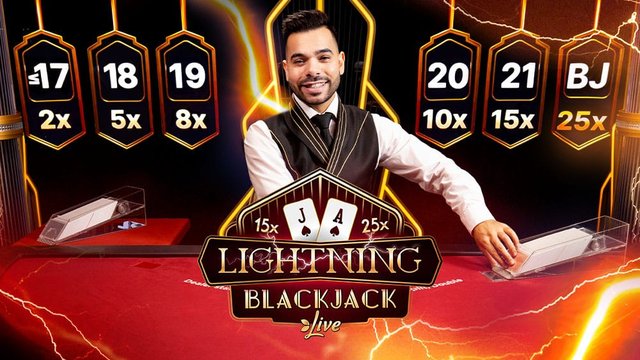
From Evolution: Infinite Blackjack, a table with no player limit where everyone receives the same first two cards, and Lightning Blackjack, with random multipliers in exchange for an extra fee on every hand, which changes the cost calculation. Pragmatic Play offers tables such as Free Bet Blackjack and ONE Blackjack. Read each version’s rules: they differ in exactly the details that move the edge.
Basic strategy in brief
The full chart covers every hand, but a few of its rules avoid the costliest mistakes: always split aces and eights, never split tens or fives. Stand on hard 17 or more. Double on 11 against most dealer cards. On hard 12 to 16, stand if the dealer shows 2 to 6 (except 12 against 2 and 3) and hit against 7 or higher. The chart shifts slightly with the number of decks and the table rules, so use the one that matches the table.
How bonus terms treat it
Because the edge is low, most terms count blackjack at a low rate or exclude it. A bonus requiring AED 17,500 in bets at 10% contribution needs AED 175,000 on blackjack tables, so do the sum before you accept.
Session maths in AED
At AED 25 a hand and 60 hands an hour at a live table you stake about AED 1,500. With basic strategy and good rules the expected cost is about AED 7.50. Play “by feel” and let the edge rise to 2%, and it becomes AED 30. At a 6 to 5 table with playing mistakes it can pass AED 50. The best things you can do: learn basic strategy or keep a printed chart, decline insurance and skip side bets. 21+.
Frequently asked questions
What is the house edge in blackjack?
About 0.5% with basic strategy and good rules (3 to 2 payout, dealer stands on soft 17). It rises sharply with worse rules or playing mistakes.
How much does a 6 to 5 payout cost?
It adds about 1.4 points to the house edge compared with 3 to 2.
Should I take insurance?
No, unless you are counting cards. Its chance is lower than needed to justify the 2 to 1 payout.
What is basic strategy?
A chart of the mathematically best decision (hit, stand, double, split) for every hand against the dealer’s up-card.
Does blackjack count towards wagering?
Usually at a low rate or not at all, because its house edge is low.
Ahmed Maher is a writer, editor and Arabic translator specialising in online casino and gaming content. He publishes on Casino.org, and his professional profile lists earlier experience at iGaming.com. His work focuses on explaining games and simplifying information about platforms and how to use them.
 Edited and checked by Reine Sevazlian · Last updated: 8 نوفمبر 2026
 Responsible gambling
Play for entertainment, within limits
Gambling is for adults only (21+) and always carries risk. These habits help keep it within the limits of entertainment.

Set a deposit limit
Decide before you play how much you can spend without it affecting you, per day, week or month.
Use reminders
A reminder every 30 or 60 minutes shows how long you have played and what you have spent.

Take a break
Time-outs and self-exclusion lock your account for days or months, and cannot be undone early.

Watch for the signs
Chasing losses, hiding your play, borrowing to play or feeling anxious when you stop are signs to ask for help.
Need to talk to someone? Talk to a doctor or a counsellor you trust. The responsible gambling page gathers practical steps to set limits or stop.