
Game type
Poker: how they work and where to find them
Casino poker against the dealer, poker rooms against other players, and video poker. The rules of each family, the hand rankings with their real probabilities, the house edge of each variant according to Wizard of Odds and the studios’ own pages, and what a session costs in AED.
Written by Ahmed Maher









On this page
- Casino poker and poker rooms: two different games
- Hand rankings and their probabilities
- Casino poker: the main variants and their edge
- Poker room games: hold’em, Omaha, stud and draw
- Video poker: where your decision makes the difference
- Live or RNG
- Budget and session maths in AED
- Bonuses and table games
- Responsible play
Casino poker and poker rooms: two different games
In a casino, “poker” means two things that share little beyond the hand rankings. In casino poker you sit opposite a dealer who represents the house, you try to beat the dealer’s hand, and wins are paid from a fixed table. There is an edge built into the rules, just as in blackjack or roulette. In a poker room you play against other players, the money moves between you, and the casino does not profit from your losses: it takes a small commission from each pot, called the rake, or a fixed fee on top of a tournament buy-in.
That difference changes everything. In casino poker no skill turns the edge in your favour; the best a correct strategy can do is bring the cost down to its minimum. In a poker room a player who is better than the opposition can in theory win over the long run, but the rake comes out of everyone, and most players are not better than their opponents.
Hand rankings and their probabilities
A 52-card deck holds 2,598,960 different five-card hands. The table gives the number of each hand and its probability, from Wikipedia’s poker probability table, and what three well-known pay tables pay: the Blind bet in Ultimate Texas Hold’em, the Raise bet in Caribbean Stud, and full-pay 9/6 Jacks or Better at maximum bet (multiples of the stake, as published by Wizard of Odds).
| Hand | Hands | Probability | UTH Blind | Caribbean Stud Raise | Jacks or Better 9/6 |
|---|---|---|---|---|---|
| Royal flush | 4 | 0.000154% | 500 to 1 | 100 to 1 | 800 |
| Straight flush | 36 | 0.00139% | 50 to 1 | 50 to 1 | 50 |
| Four of a kind | 624 | 0.024% | 10 to 1 | 20 to 1 | 25 |
| Full house | 3,744 | 0.144% | 3 to 1 | 7 to 1 | 9 |
| Flush | 5,108 | 0.197% | 3 to 2 | 5 to 1 | 6 |
| Straight | 10,200 | 0.392% | 1 to 1 | 4 to 1 | 4 |
| Three of a kind | 54,912 | 2.11% | Push | 3 to 1 | 3 |
| Two pair | 123,552 | 4.75% | Push | 2 to 1 | 2 |
| One pair | 1,098,240 | 42.26% | Push | 1 to 1 | 1 (jacks or better only) |
| High card | 1,302,540 | 50.12% | Push | 1 to 1 | 0 |
Notice that about half of all hands do not even hold a pair, and that every table pays far less on a rare hand than its true rarity. That gap is where the house edge lives.
Casino poker: the main variants and their edge
| Game | How it works | House edge with best play |
|---|---|---|
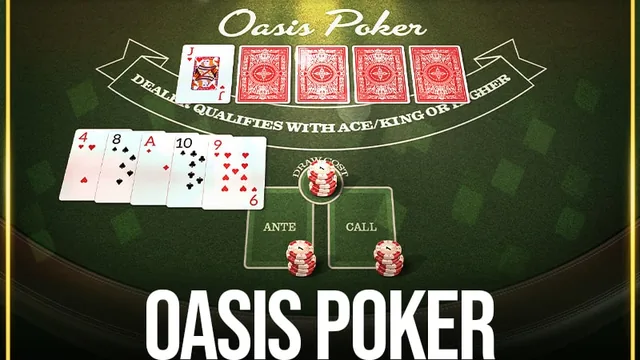
| Ultimate Texas Hold’em | Equal Ante and Blind, one raise: 3x or 4x before the flop, 2x after it, or 1x after the river | 2.185% of the Ante |
| Casino Hold’em | You decide after the flop: fold, or call at twice the Ante; the dealer qualifies with a pair of fours or better | 2.16% on the most common pay table |
| Texas Hold’em Bonus | Bets on the flop, turn and river as in real hold’em, against the dealer | 2.04% under Las Vegas rules |
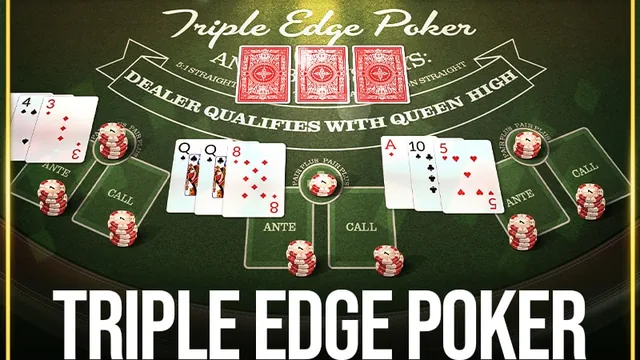
| Three Card Poker | Three cards, the dealer qualifies with a queen, an Ante Bonus for a straight or better | 3.37% on Ante and Play, 7.28% on Pair Plus with the common table |
| Caribbean Stud Poker | Five cards, one dealer card face up, the dealer qualifies with ace-king | 5.22% |
| Let It Ride | Three equal bets, two of which you can pull back as cards are revealed; no dealer hand | 3.51% of one bet |
| Pai Gow Poker | Seven cards split into a five-card and a two-card hand, 5% commission on wins | About 2.72% against a dealer using the house way |
Ultimate Texas Hold’em
Its exclusive live version comes from Evolution, developed in partnership with Scientific Games. You place equal Ante and Blind bets, with an optional Trips bet. The twist is that you raise only once, and the earlier you raise, the more you can bet. The dealer needs a pair to qualify; if not, the Ante pushes. Wizard of Odds puts the house edge at 2.185% of the Ante, but because the average total bet per hand is 4.15 times the Ante, the loss relative to everything you bet (the “element of risk”) is only 0.53%. The Trips bet has four known pay tables, with an edge between 0.90% and 6.18%. See the game page.
Casino Hold’em and Texas Hold’em Bonus
In Casino Hold’em you see your two cards and the flop, then decide once. Wizard of Odds says a player using optimal strategy calls 82% of the time. Texas Hold’em Bonus is closer to the flow of real hold’em: a compulsory bet of twice the Ante to see the flop, then optional bets on the turn and river. Its Bonus side bet, based on your first cards, carries an 8.54% edge.
Three Card Poker and Teen Patti
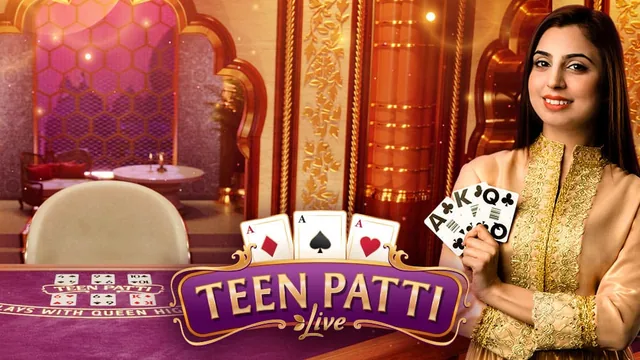
In Three Card Poker you get three cards and decide: fold or make a Play bet equal to the Ante. The rule that gives the lowest edge is simple: raise with Q-6-4 or better. With three cards a straight is rarer than a flush, so it ranks higher. Teen Patti comes from India; Evolution says it was inspired by Three Card Brag. It resembles Three Card Poker with one important change: three of a kind outranks a straight flush. Wizard of Odds puts the edge of the version it analysed at 3.79% on the main bet. In live casino it is offered by Evolution, and Ezugi runs two versions: Teen Patti 3 Card against the dealer, and Bet on Teen Patti, where you bet on which of two hands will win.
Caribbean Stud, Let It Ride and Pai Gow
Caribbean Stud is the most expensive of the main variants: 5.22% of the Ante. You see one of the dealer’s cards, and the general rule is to raise with a pair or better and fold anything below ace-king. In Let It Ride you start with three bets and can pull two back, so on average a player ends with 1.23 bets on the table. Pai Gow Poker uses 53 cards with a semi-wild joker, and more than 40% of hands end in a push, which makes it one of the slowest casino games in cost per hour.
Poker room games: hold’em, Omaha, stud and draw
Texas Hold’em is the best-known game. The two players to the dealer’s left post the small and big blinds, and each player gets two hidden cards. Then come a betting round, the flop (three shared cards), a betting round, the turn (a fourth card), a round, the river (a fifth card) and a final round. The best five-card hand from the seven wins, or the last player who has not folded. The two ideas that matter most for a beginner: position, acting last so you see the others’ decisions first, and pot odds: if the pot holds AED 300 and you must call AED 100, you pay 100 to win 400, so you need to win more than 25% of the time for the call to pay.
It is played in three formats: cash games, which you join and leave when you like, with chips worth real money; tournaments, where you pay a fixed buy-in and play until you are out or win, with blinds that rise on a schedule; and sit and go, a small tournament that starts when its seats are filled. In Omaha each player gets four cards and must use exactly two of them with three of the shared cards. Seven-Card Stud has no shared cards: each player is dealt seven cards, some face up, with a betting round after each stage of the deal. Five-Card Draw is the simplest: five hidden cards, one draw, and it is the basis of video poker.
Video poker: where your decision makes the difference
Video poker is Five-Card Draw against a machine: five cards, you hold what you want, the rest are replaced once, and you are paid from a fixed table. Because the table is in front of you, the return can be worked out exactly. Wizard of Odds figures with best play: Jacks or Better 9/6 returns 99.54%, Bonus Poker 8/5 99.17%, Double Double Bonus 9/6 98.98%, and Deuces Wild on its full-pay table 100.76%, a very rare table; the common ones pay less. “9/6” means a full house pays 9 and a flush 6; dropping to 8/5 cuts the return by about two points.
Watch the royal flush too: full-pay tables pay 800 times at the five-coin maximum bet, lower ones pay 250. That is why our practice video poker shows a 98.37% return on the same 9/6 table: it pays the royal at 250. Evolution offers First Person Video Poker with five pay tables to choose from and up to 100 hands per round.
Live or RNG
In live poker a real dealer deals real cards in a studio, the table is streamed on video, and many players play the same hand, each against the dealer. The pace is slower and you have a set number of seconds to decide. In RNG poker a random number generator shuffles a virtual deck and you play at your own speed. Rules and edge are identical on the same pay table; the difference is speed: the RNG version can give you twice the hands per hour, so twice the expected cost. Read the live casino guide.
Budget and session maths in AED
An Ultimate Texas Hold’em example: AED 25 on the Ante and AED 25 on the Blind. According to Wizard of Odds the average total bet per hand is 4.15 times the Ante, about AED 104, and the expected loss is 2.185% of the Ante, about AED 0.55 a hand. Fifty hands mean roughly AED 5,190 in bets and an expected loss of about AED 27. But the standard deviation of a single hand is 4.94 times the Ante, so a fifty-hand session can easily end hundreds of dirhams down. Set a budget that can absorb those swings, AED 500 for this stake for example, and stop when it is gone. And remember that side bets such as Trips and Pair Plus raise the cost a lot.
Bonuses and table games
Bonus terms usually treat poker and table games differently from slots: they count at a small fraction of each bet, or not at all, and poker rooms are often excluded from bonuses entirely. AED 1,000 bet on Casino Hold’em may count as only AED 100 towards the wagering requirement, or nothing. Read the bonus terms guide and game weighting before you accept any offer.
Responsible play
Poker gives a stronger feeling of control than any other casino game, and that feeling is what makes chasing losses easy. Best play lowers the cost; it does not remove it. Learn the rules first with practice hold’em and practice video poker, read the casino poker guide, and see the responsible gambling page. 21+.
Frequently asked questions
What is the difference between casino poker and a poker room?
In casino poker you play against the dealer and the casino keeps an edge built into the rules. In a poker room you play against other players, and the casino takes a commission from the pot (the rake) or tournament fees.
Which casino poker game costs the least?
Among the main table games: Texas Hold’em Bonus at about 2.04%, Casino Hold’em at about 2.16% and Ultimate Texas Hold’em at about 2.19% of the Ante, according to Wizard of Odds and with best play. Video poker on a 9/6 table reaches 99.54%.
How likely is a royal flush?
4 hands out of the 2,598,960 possible five-card hands, about 1 in 649,740.
Are side bets worth it?
They usually cost more: Pair Plus in Three Card Poker carries 7.28% on the common table and the Bonus bet in Texas Hold’em Bonus about 8.54%, against roughly 2% to 3.4% on the main bets.
What is Teen Patti?
A three-card game from India, close to Three Card Poker except that three of a kind outranks a straight flush. Evolution and Ezugi offer it with a live dealer.
Does poker count towards bonus wagering?
Usually at a small fraction or not at all, and poker rooms are often excluded. Read the game weighting table in the terms of the offer itself.
Ahmed Maher is a writer, editor and Arabic translator specialising in online casino and gaming content. He publishes on Casino.org, and his professional profile lists earlier experience at iGaming.com. His work focuses on explaining games and simplifying information about platforms and how to use them.
 Edited and checked by Reine Sevazlian · Last updated: 6 نوفمبر 2026
 Responsible gambling
Play for entertainment, within limits
Gambling is for adults only (21+) and always carries risk. These habits help keep it within the limits of entertainment.

Set a deposit limit
Decide before you play how much you can spend without it affecting you, per day, week or month.
Use reminders
A reminder every 30 or 60 minutes shows how long you have played and what you have spent.

Take a break
Time-outs and self-exclusion lock your account for days or months, and cannot be undone early.

Watch for the signs
Chasing losses, hiding your play, borrowing to play or feeling anxious when you stop are signs to ask for help.
Need to talk to someone? Talk to a doctor or a counsellor you trust. The responsible gambling page gathers practical steps to set limits or stop.